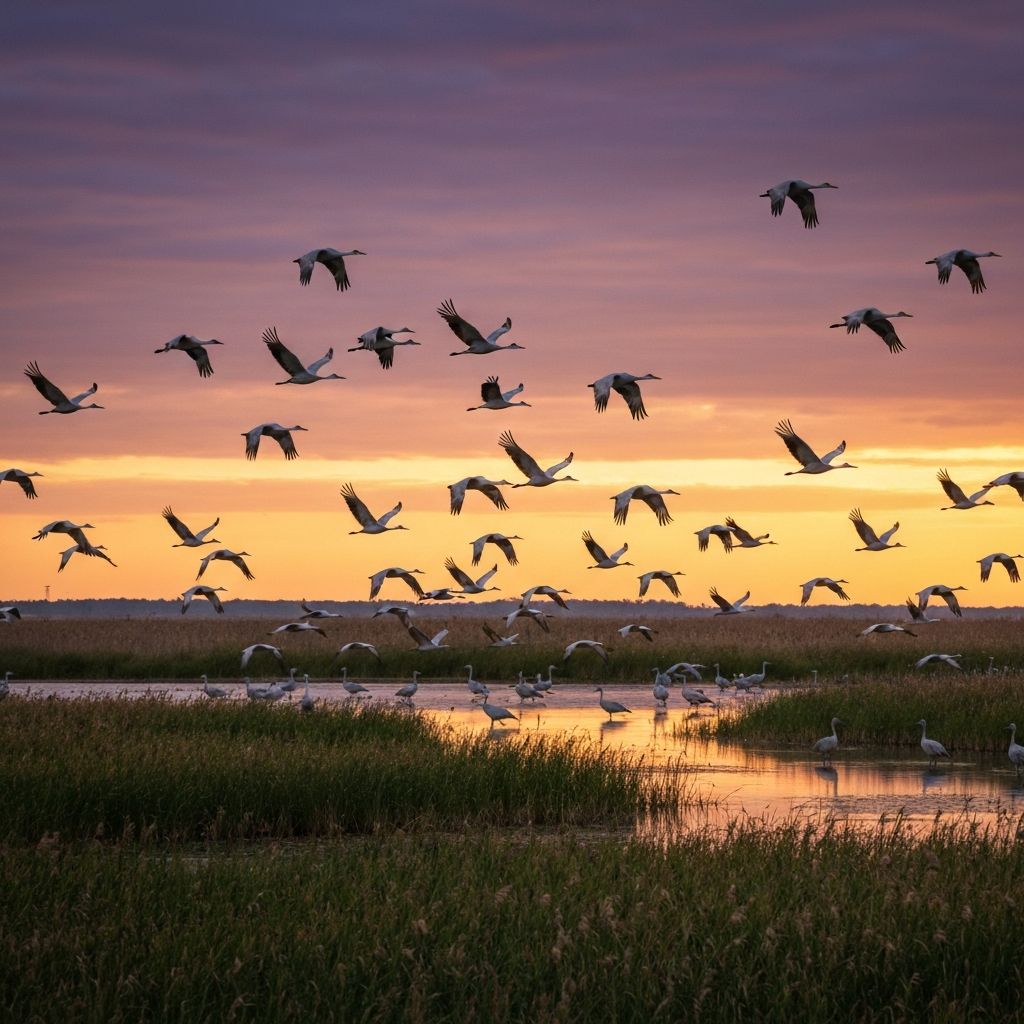
Every fall, over 600,000 sandhill cranes migrate through the Central Flyway, creating one of nature's greatest wildlife spectacles. As hunters and outdoor enthusiasts, we have both a responsibility and an opportunity to protect these magnificent birds for future generations.
What Is the Central Flyway?
The Central Flyway is a major north-south migration route stretching from the Arctic tundra of Canada and Alaska through the Great Plains to the Gulf Coast and into Mexico. For sandhill cranes, this corridor is essential for their annual journey between breeding and wintering grounds.
The Platte River Valley in Nebraska serves as the most critical stopover point, where cranes rest and refuel during spring migration. This single stretch of river hosts 80% of the world's sandhill crane population each March.
Why Are Sandhill Cranes Important?
Sandhill cranes are ecological indicators. Their presence signals healthy wetland ecosystems. As they feed in agricultural fields and roost in shallow rivers, they contribute to nutrient cycling and wetland health.
These birds also carry cultural significance. Indigenous peoples have honored cranes for thousands of years. Today, crane watching generates millions in tourism revenue for rural communities along the flyway.
How Do Hunters Support Conservation?
Hunters are among the most dedicated conservationists. Through license fees, excise taxes on equipment, and organizational memberships, hunters contribute billions of dollars annually to wildlife conservation. This funding supports:
- Habitat acquisition: Purchasing and protecting critical wetlands and grasslands
- Habitat restoration: Returning degraded lands to productive wildlife habitat
- Research: Funding studies that inform management decisions
- Population monitoring: Tracking crane numbers to ensure sustainable harvest
Current Conservation Challenges
Despite healthy population numbers, sandhill cranes face ongoing threats. Habitat loss remains the primary concern as wetlands are drained for agriculture and development. Climate change is altering migration timing and affecting food availability along traditional routes.
Water management poses particular challenges. Cranes need shallow, braided rivers for roosting, but dams and irrigation withdrawals have altered many waterways. Conservation groups work continuously to maintain adequate water flows during critical migration periods.
What Can You Do to Help?
Every hunter and outdoor enthusiast can contribute to crane conservation:
- Support conservation organizations: Groups like Ducks Unlimited, Delta Waterfowl, and the International Crane Foundation do vital work protecting crane habitat
- Practice ethical hunting: Follow regulations, respect bag limits, and hunt sustainably
- Participate in citizen science: Report crane sightings to help researchers track populations
- Advocate for wetlands: Support policies that protect and restore wetland habitats
The Hunter-Conservationist Legacy
The North American Model of Wildlife Conservation proves that regulated hunting and healthy wildlife populations can coexist. Sandhill crane populations have thrived under this model, growing from historic lows to today's robust numbers.
When we purchase a crane tag, invest in quality gear, or introduce someone new to hunting, we're participating in a conservation system that has protected wildlife for over a century. That's a legacy worth continuing.
The ancient call of the sandhill crane has echoed across these plains for millions of years. By supporting conservation today, we ensure that future generations will experience the same awe we feel when those magnificent birds fill the sky.