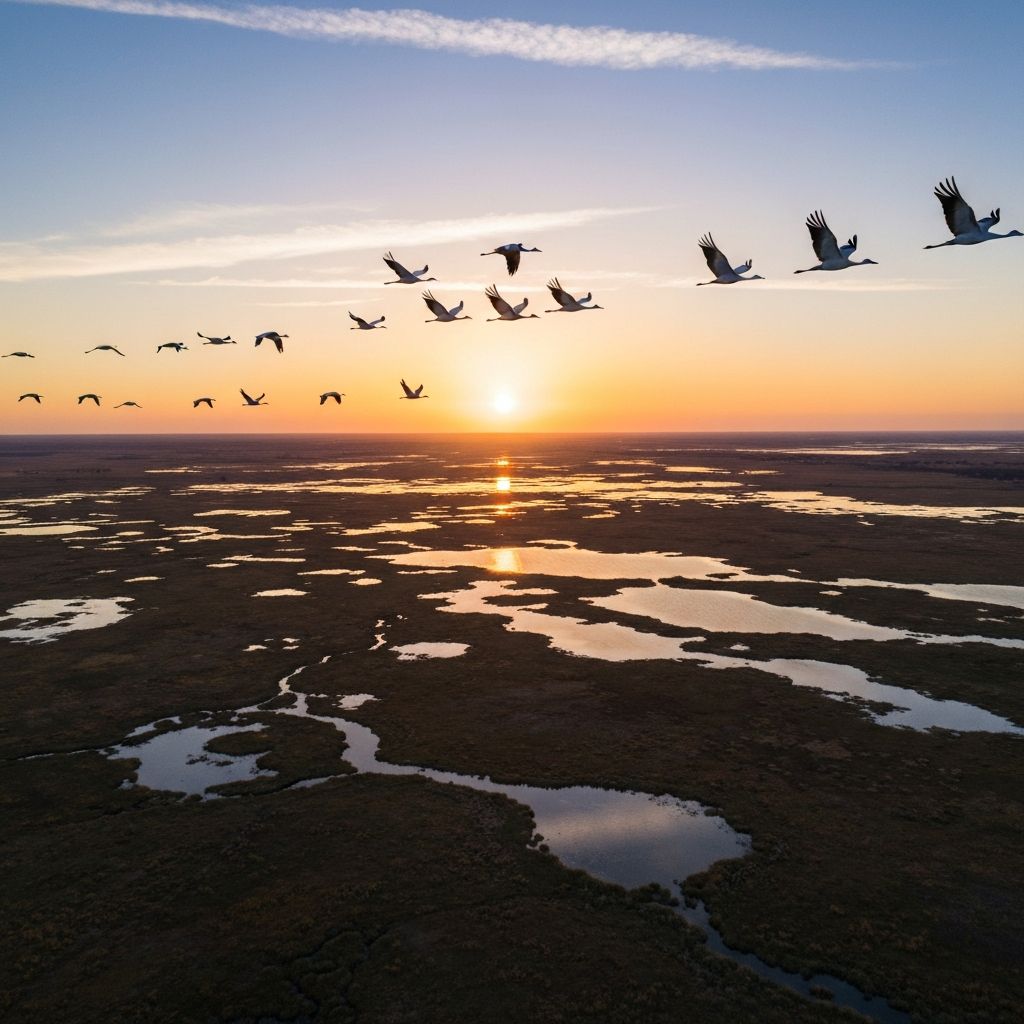
Preparing for your first sandhill crane season can feel overwhelming. What gear do you actually need? This comprehensive guide breaks down the essentials so you can focus on the hunt, not the gear list.
What Equipment Do You Need for Crane Hunting?
Sandhill crane hunting requires specific gear that differs from other waterfowl pursuits. The good news is that you don't need to break the bank to get started. Here's what matters most.
Decoys: Your Most Important Investment
Crane decoys are essential for convincing birds to commit to your setup. Unlike ducks or geese, cranes are tall birds that can spot danger from far away. Your decoys need to be visible and realistic.
Start with a minimum of six full-body decoys. Position them in family groups of two to four birds, with some feeding and others in alert postures. Leave landing zones between groups to give incoming birds a place to target.
Motion Decoys
Adding movement to your spread dramatically increases effectiveness. Wind-activated motion stakes or battery-powered decoys catch the attention of distant flocks and add realism that static decoys can't match.
Concealment: Blinds and Layout Options
Cranes have exceptional eyesight, making concealment critical. Layout blinds are the most popular choice, allowing you to hide in agricultural fields where cranes typically feed.
Match your blind to the terrain. In stubble fields, use natural-colored blinds and add local vegetation for additional concealment. In green fields, grass-pattern blinds work better. The key is disappearing into your surroundings.
Clothing and Camouflage
Your clothing should match your blind and surroundings. Earth tones work well in most situations. Key considerations include:
- Face coverage: A face mask or paint prevents your face from flashing at incoming birds
- Gloves: Hide your hands, which birds notice when you shift in your blind
- Layering: Crane hunting often means cold mornings and warm afternoons
Calls: Bringing Birds to Your Spread
A quality crane call is essential gear. Look for calls that produce the characteristic rolling rattle of sandhill cranes. Practice before the season to develop confidence in your calling ability.
Optics: Spotting Birds Early
Good binoculars help you spot incoming flocks while they're still specks on the horizon. This gives you time to prepare, get into position, and start calling at the right moment. Look for 8x or 10x magnification with quality glass.
Shotguns and Ammunition
Sandhill cranes are large, tough birds. Most hunters prefer 12-gauge shotguns with 3-inch or 3.5-inch chambers. Steel shot in BB or BBB sizes is standard, though many hunters are switching to premium non-toxic options like tungsten blends for better performance at range.
Building Your Kit Over Time
You don't need everything at once. Start with the basics: a few decoys, a blind, appropriate clothing, and a call. Add specialized gear like motion decoys and premium optics as you gain experience and identify what improves your hunts.
The most important gear is the knowledge of how to use it. Spend time scouting, learn bird behavior, and practice your calling. Great gear supports good hunting skills but never replaces them.